Employee or Contractor? The Federal Test, and Why It Is Mid-Rebuild
The wage test, the tax test and the discrimination test give different answers, one of them is being rewritten, and your state may overrule all three.
You have been paying someone the same amount every week for nine months, they work in your building on your equipment, and your bookkeeper has them down as a contractor. Or you are on the other side of it: you have been working that nine months under a 1099 with no overtime, and you are starting to wonder whether the label was ever yours to lose. Either way, the question you actually have is narrower than it looks — which body of law am I asking about — because the United States answers it more than once, with different tests, and one of those answers has been in motion since 2025.
Start there. Everything else follows from it.
The federal government asks the question more than once
| The question | Who answers it | The test | What turns on it |
|---|---|---|---|
| Minimum wage, overtime, recordkeeping | Department of Labor, Wage and Hour Division | Economic dependence, assessed through six factors under the rule currently in the CFR | Back wages, overtime, liquidated damages |
| Federal income tax, Social Security, Medicare, FUTA | Internal Revenue Service | Common-law right to control, sorted into three categories | Withholding, the employer share of FICA, the self-employment tax |
| Protection from discrimination and retaliation | Equal Employment Opportunity Commission and the courts | A case-by-case test; the EEOC’s own coverage page says the question is complicated and points a worker who is unsure to the agency | Coverage under Title VII, the ADEA and the ADA |
The practical consequence is that the same working arrangement can be employment for one statute and contracting for another. The EEOC’s coverage page says flatly that people who are not employed by the employer, “such as independent contractors, are not covered by the anti-discrimination laws” — and then says that figuring out whether someone is an employee is complicated. A worker outside the FLSA’s minimum wage protection is not automatically outside a discrimination statute, because the question is asked and answered separately.
Two of those three are worth walking through in detail. The middle one — tax — is where the money is hardest and the definition is oldest.
The tax test: control over the how, not the what
The IRS’s starting point is short enough to quote: a worker is an independent contractor if the person paying for the services has the right to control or direct only the result of the work, “and not what will be done and how it will be done.” It then says the thing most people miss: a worker is not a contractor if the services can be controlled by an employer, “even if you are given freedom of action” — what matters is that the employer has the legal right to control the details.
The right, not the exercise of it. That single substitution decides a large share of close cases, and it is why “I was never actually told what to do” answers a narrower question than it seems to.
The IRS sorts the evidence into three categories — behavioral control, financial control, and the relationship of the parties — and is explicit that this is a weighing exercise, not a checklist: according to Publication 1779, “no single fact provides the answer.” A few of the specific signals are worth knowing because they cut against intuition:
- Tools are weak evidence. Purchasing thousands of dollars of equipment points toward contracting, but the IRS notes that in construction many workers do exactly that and are still employees. There is no dollar threshold for a “significant investment.”
- Your own expertise does not settle it. Under the rule now in the CFR, bringing specialized skills to the relationship “is not itself indicative” of contractor status, because both employees and contractors can be skilled; the regulation looks for those skills combined with business-like initiative.
- Compliance with legally required standards is not control. The proposed rule would treat transportation safety rules, insurance requirements, contractual deadlines and quality standards as ordinary terms between businesses rather than as control, in the same way it treats compliance with a specific legal obligation.
- The contract is evidence, not an answer. The IRS states that it is not required to follow a contract that labels the worker an independent contractor.
A signed agreement still matters — it shows what the parties intended, and the IRS treats it as significant when the other facts are unclear — but it does not create the classification.
What changes if you are on the other side of the label
For the business, the difference is not one tax but four: income tax withholding, the employer’s half of Social Security and Medicare (6.2 percent each side of Social Security up to a 2026 wage base of $184,500, and 1.45 percent each side of Medicare with no wage cap), federal unemployment tax (6.0 percent on the first $7,000 of wages per employee, less a credit of up to 5.4 percent for state payments, which nets 0.6 percent when the credit is full), and the state unemployment contribution. For the worker, the difference is that a contractor pays both halves at once: self-employment tax is 15.3 percent of net self-employment income, and half of that figure becomes an above-the-line deduction from gross income.
The IRS provides a middle path when the facts were genuinely unclear. Under section 3509, if the employer issued the required information returns, the rates are 7.44 percent for Social Security and 1.74 percent for Medicare — the employer share plus 20 percent of the employee share — and 1.5 percent for income tax withholding. Those rates are unavailable where the employer intentionally disregarded the withholding requirement. A separate relief provision, Section 530, can relieve the payer of the employment taxes where there was a reasonable basis for the treatment, provided the required returns were filed consistently and no worker in a substantially similar position was treated as an employee for periods beginning after 1977. The IRS notes that this relief does not make the worker a contractor; it only relieves the service recipient.
The wage test, and the rebuild in progress
The FLSA question is where the ground has moved, and a 2026 article that quotes a single federal standard is out of date by construction. Three things are true at once.
First, the rule in the Code of Federal Regulations is still the 2024 rule, and the Department still says so. Its misclassification page continues to point employers and workers to 29 CFR part 795 and to describe the rule as revised guidance, and Fact Sheet #13 carries a note at the top saying the regulation “remains in effect for purposes of private litigation.”
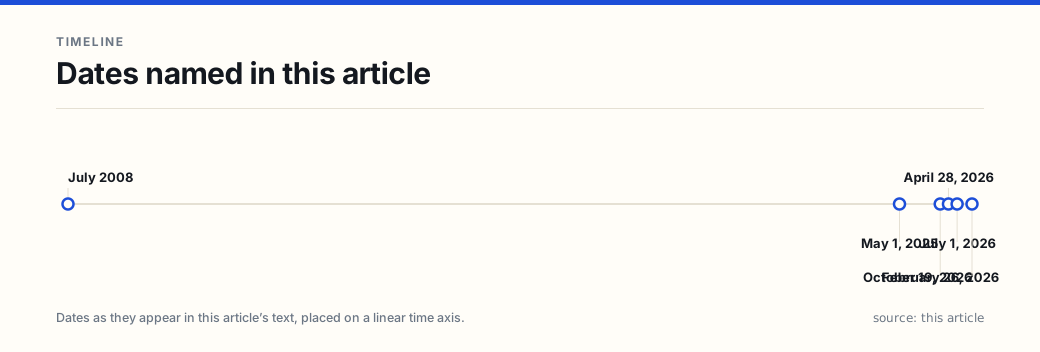
Second, the Wage and Hour Division is not using it. Field Assistance Bulletin No. 2025-1, dated May 1, 2025, instructed field staff to no longer apply the 2024 rule’s analysis in FLSA investigations, and to enforce the statute under the analysis in the July 2008 version of Fact Sheet #13 as informed by Opinion Letter FLSA2025-2, for matters in which no back wages or civil money penalties had been paid as of that date. The fact sheet itself now carries a pointer to the bulletin.
Third, the Department has proposed to replace the rule. On February 26, 2026 it published a notice of proposed rulemaking to rescind the 2024 rule and substitute an analysis built on two “core factors”: the nature and degree of control over the work, and the opportunity for profit or loss. Each is described as typically carrying greater weight than any other factor, and where both point the same way the proposal says there is “a substantial likelihood” that is the correct classification. Three secondary factors — skill required, permanence of the relationship, whether the work is part of an integrated unit of production — matter mainly when the two core factors disagree. The proposal would also apply the same analysis under the FMLA and the migrant and seasonal agricultural worker protection statute — by replacing the analysis at 29 CFR 500.20(h)(4) with a cross-reference to part 795, and by revising the definition of “Employee” at 29 CFR 825.102 and the language at 825.105(a) — and it carries a paragraph titled “primacy of actual practice”: what the parties actually do beats what the contract says they could do.
The comment period closed at 11:59 p.m. ET on April 28, 2026. No final rule had been published as of October 19, 2026. Two things follow, and they matter more than the factor list itself. The proposed factors are not the law you should reason from yet. For an FLSA question today, the sources that count are the text currently in the CFR, the enforcement bulletin it displaced, and the court decisions applying economic reality — and those three do not always agree. And the shape of the proposal tells you where the Department is heading: control and profit-or-loss as the two factors that carry the most weight, with the permanence of the relationship among the three that matter mainly when those two disagree.
Your state may overrule every one of these
None of the above decides whether you are an employee under state wage law, and that is the law that most often produces a recovery.
The most important divergence is the ABC test, which begins from the opposite presumption: every worker is an employee unless the hiring entity proves all three parts — that the worker is free from the hiring entity’s control and direction both in the contract and in fact; that the worker performs work outside the usual course of the hiring entity’s business; that the worker is customarily engaged in an independently established trade, occupation, or business of the same nature. California’s Labor Commissioner states it in those terms, and explains that the initial presumption is what makes it harder to pass than a factor-weighing test: the burden is on the hiring entity, and part B alone — outside the usual course of the business — is close to unsatisfiable for a worker doing the same thing the customer’s business exists to do.
California’s version also shows how little a single national summary can capture. The test came from Dynamex in 2018, was codified by AB 5 in 2019 in Labor Code sections 2775 through 2787, and applies to most workers but not all: the statute and the wage orders carve out particular occupations where the older multi-factor Borello test applies instead — licensed insurance agents and brokers, licensed physicians and certain other licensed health professionals, licensed attorneys, architects, engineers, private investigators and accountants, registered securities brokers and advisers, direct salespeople, some newspaper distributors and carriers, and others — and the ABC test also gives way where federal law preempts it. Which test applies is a question about your occupation, not just your state.
Other states run variants rather than copies. New York applies a set of statutory factors borrowed from the federal analysis; some states apply ABC only to wage orders and a different test elsewhere; some use an ABC test with a longer exemption list. The detail varies by state, and it changes faster than the federal rule does — which is why the only reliable move is to read the statute your state actually has, through the state labor department’s own page, rather than a national summary.
One more layer sits on top. The Department of Labor’s state minimum wage table, updated July 1, 2026, puts California at $16.90 an hour, Connecticut at $16.94, dozens of other states above the federal $7.25 set in 2009, and still shows states with no state minimum at all. Where both state and federal law apply, the worker is entitled to the higher minimum wage. Misclassification is often the mechanism by which the higher state standard is avoided, which is why the state test is where most of the exposure is.
What to do, depending on which side you are on
If you are hiring and the relationship is a real contracting relationship, the test you have to pass is not the one in the contract. Write down, for each of the three federal regimes, what actually happens: who sets the hours, who decides which jobs are accepted, whether the worker markets to other customers, whether there are real losses as well as real profits, how long it has run, whether the work is the core of your business. The three categories the IRS names are behavioral control, financial control and the type of relationship; permanence sits inside the third, and the proposed FLSA rule makes it one of three secondary factors. A contractor with the same schedule, the same desk and the same reporting line after two years makes the relationship harder to defend under either. Then check your state, because a clean federal file is no defense to a state ABC claim.
If you suspect you have been misclassified, the routes are different and so is the money:
- Unpaid overtime and minimum wage. That is a Wage and Hour Division matter under the FLSA and, separately, a claim under state wage law, where states that do allow a private action frequently attach liquidated damages, attorneys’ fees and their own filing period. The periods differ from state to state, so check the one you work in.
- Employment taxes. Form SS-8 asks the IRS for a formal determination; either the business or the worker may file it, and the IRS warns it may take at least six months. Form 8919 lets you report your share of the uncollected Social Security and Medicare tax on your return while the status question is pending, which is how the worker’s share gets accounted for on the return while the status question is pending.
- Discrimination or retaliation. Whether the agency or the courts treat you as an employee for that statute is a separate question from the tax and wage ones, and the deadlines are short. For Title VII, the ADEA and the ADA, the EEOC’s own page gives the rule in numbers: a charge must generally be filed within 180 calendar days from the day the discrimination took place, extended to 300 calendar days where a state or local agency enforces a law prohibiting employment discrimination on the same basis. For age, the extension applies only where a state law prohibits age discrimination and a state agency enforces it; a local law alone does not extend it.
Keep the ordinary records while you decide: the contract, the payment records, the messages that set your schedule, and the invoices you sent. In every one of these forums the decisive material is what the parties did, and that evidence is easiest to assemble while you still have the job.
Disclaimer
This article describes federal and California law as of October 19, 2026 and is general information, not legal advice. Worker classification depends on the specific facts of a relationship, the rule described here is under active revision, and state tests differ in ways a national summary cannot capture. Consult an employment attorney or tax professional in your state before acting on any of it.
Frequently asked questions
- Does one federal test decide whether I am an employee or a contractor?
- No. The Fair Labor Standards Act question (minimum wage and overtime) is decided under an economic reality test, the federal tax question under the IRS's common-law control test, and the discrimination question under a looser definition that does not turn on the usual factors at all. A single arrangement can be employment for one statute and contracting for another.
- Is the 2024 Labor Department rule still the law?
- It is still the text in 29 CFR part 795, and the Department's own fact sheet says it remains in effect for purposes of private litigation. But the Wage and Hour Division stopped applying it to its own investigations on May 1, 2025, and on February 26, 2026 the Department proposed to rescind it and replace the analysis with two core factors plus three secondary ones. As of October 2026 that is a proposal, not a final rule.
- If my state has an ABC test, does the federal test matter?
- For state wages and benefits, no — the ABC test decides, and it is harder to pass. But the federal minimum wage, overtime and employment-tax obligations are separate questions, and they are answered under the federal tests. In practice the stricter standard is the one that governs how you have to run the relationship, because you have to satisfy both.
- Can a signed contract make me an independent contractor?
- No. The Labor Department's fact sheet says agreeing verbally or in writing to be classified as a contractor, including by signing an independent contractor agreement, does not make a worker an independent contractor under the FLSA. The IRS says it is not required to follow a contract that labels the worker a contractor. What the parties actually do is what gets examined.
- I think I was misclassified. Where do I start?
- Two routes lead to a worker directly: the IRS Form SS-8 determination, which either the business or the worker may file, and Form 8919, which lets a worker report their share of uncollected Social Security and Medicare tax while the status question is pending. The Department's Wage and Hour Division takes complaints on minimum wage and overtime, which is a different pot of money. Which one is worth your time depends on what you actually lost.
Sources
Each source is a primary or official reference, checked before publication. Links open the original.
- U.S. Department of Labor, Wage and Hour Division — 29 CFR part 795, employee or independent contractor classification under the FLSA (text still in the CFR; the Department describes it as remaining in effect for purposes of private litigation) — dol.gov/agencies/whd/flsa/misclassification
- U.S. Department of Labor, Wage and Hour Division — Field Assistance Bulletin No. 2025-1 (May 1, 2025): WHD no longer applies the 2024 rule analysis in FLSA investigations; it uses the July 2008 version of Fact Sheet #13 as informed by Opinion Letter FLSA2025-2 — dol.gov/sites/dolgov/files/WHD/fab/fab2025-1.pdf
- U.S. Department of Labor, Wage and Hour Division — Fact Sheet #13, Employee or Independent Contractor Classification Under the FLSA (revised March 2024), including the statement that a label or a signed independent contractor agreement does not make a worker an independent contractor — dol.gov/agencies/whd/fact-sheets/13-flsa-employment-relationship
- U.S. Department of Labor — Notice of Proposed Rulemaking, Employee or Independent Contractor Status Under the FLSA, FMLA and MSPA, 91 Fed. Reg. 9932 (Feb. 27, 2026); docket WHD-2026-0001; comment period closed April 28, 2026; no final rule published as of October 19, 2026 — federalregister.gov/d/2026-03962
- U.S. Department of Labor, Wage and Hour Division — 2026 rulemaking page describing the proposed two core factors and three other factors — dol.gov/agencies/whd/flsa/misclassification/2026rulemaking
- Internal Revenue Service — Independent Contractor Defined: the right to control only the result, not what will be done and how, and the statement that a worker is not a contractor if the services can be controlled even when freedom of action is given — irs.gov/businesses/small-businesses-self-employed/independent-contractor-defined
- Internal Revenue Service — Independent Contractor (Self-Employed) or Employee? The three common-law categories, Form SS-8 (either party may file; the IRS says it may take at least six months), Form 8919 and the relief provisions — irs.gov/businesses/small-businesses-self-employed/independent-contractor-self-employed-or-employee
- Internal Revenue Service — Publication 15 (2026), section 2 on who is an employee and the section 3509 rates — irs.gov/pub/irs-pdf/p15.pdf
- Internal Revenue Service — Publication 1779 (Rev. 3-2023), Independent Contractor or Employee, including the note that no single fact provides the answer — irs.gov/pub/irs-pdf/p1779.pdf
- Internal Revenue Service — Topic no. 759, Form 940: FUTA rate of 6.0 percent on the first $7,000 of wages per employee, credit of up to 5.4 percent for state payments, 0.6 percent after the maximum credit — irs.gov/taxtopics/tc759
- U.S. Department of Labor, Wage and Hour Division — FLSA overview: federal minimum wage of $7.25 per hour effective July 24, 2009; overtime at one and one-half times the regular rate after 40 hours in a workweek — dol.gov/agencies/whd/flsa
- U.S. Department of Labor, Wage and Hour Division — State Minimum Wage Laws (table updated July 1, 2026) — dol.gov/agencies/whd/minimum-wage/state
- California Department of Industrial Relations, Labor Commissioner's Office — Independent contractor versus employee: the ABC test, Dynamex (2018) 4 Cal.5th 903, Labor Code sections 2775-2787 and the occupations where the Borello test applies instead — dir.ca.gov/dlse/faq_independentcontractor.htm
- Equal Employment Opportunity Commission — Coverage: independent contractors are not covered by the anti-discrimination laws, and the employee question is described as complicated — eeoc.gov/coverage
- Equal Employment Opportunity Commission — Time Limits for Filing a Charge: 180 calendar days, extended to 300 where a state or local agency enforces a law prohibiting discrimination on the same basis — eeoc.gov/time-limits-filing-charge