Unemployment benefits would require five documented work-search activities a week under a new federal proposal
Labor proposed a five-activity weekly minimum for unemployment benefits, reported before payment. What counts, who is exempt, and the comment deadline.
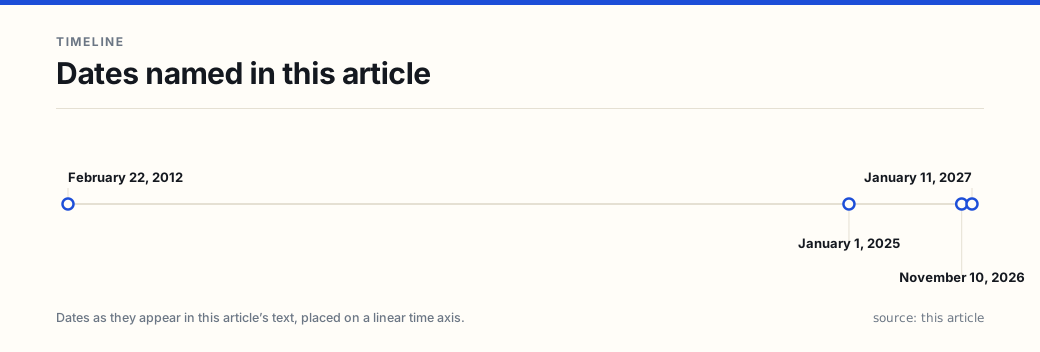
Nearly half the states require three job-search activities a week to keep unemployment benefits, and some require one — the spread the U.S. Department of Labor measured as of January 1, 2025. On November 10, 2026 the department proposed a national floor of five, reported to the state in detail before any payment is made.
The proposal — 91 Fed. Reg. 72472, docket ETA-2026-0100 — is a proposed rule. No state has to change anything yet, no claim is decided differently today, and written comments are open until January 11, 2027. What it would do is remove a definitional gap that has been open since 2012, and the way it fills that gap changes what a claimant has to write down.
What federal law already requires, and what it never defined
Unemployment insurance is a federal-state program. States run the claims, set the weekly benefit amount and decide who qualifies; the federal government attaches conditions that state laws must meet. One of those conditions is the work search.
Section 303(a)(12) of the Social Security Act — 42 U.S.C. § 503(a)(12) — requires that, “as a condition of eligibility for regular compensation for any week, a claimant must be able to work, available to work, and actively seeking work.” Congress added that paragraph on February 22, 2012, in title II of the Middle Class Tax Relief and Job Creation Act of 2012 (Public Law 112-96), under a heading that reads “Consistent job search requirements.”
The word “consistent” was aspirational. The same law delayed its own effect: the amendment applies to weeks beginning after the end of the first session of each state legislature that began after enactment, so the requirement arrived on each state’s own legislative calendar rather than on one national date.
And the statute stops at the sentence you just read. It does not say what “actively seeking work” means, how many activities satisfy it, or how a state proves it. So states wrote their own standards, and the Department’s own count, taken as of January 1, 2025, describes the result:
| Weekly work search requirement, as of January 1, 2025 | How many states, in the department’s words |
|---|---|
| Generally five activities | “a few” |
| Generally four activities | “a few” |
| Generally three activities | “nearly one-half” |
| Generally two activities | “some” |
| Generally one activity | “the remaining states” |
That table is the agency’s characterisation, not a state-by-state list, and the five bins do not capture every state: elsewhere in the same preamble the department says the states “range from simply requiring an affirmative statement of conducting work search activities to requiring upwards of five activities in any given week,” and that some states leave the number unspecified or vary it by labor market. The underlying compilation is table 5-14 in chapter 5 of the department’s Comparison of State Unemployment Insurance Laws, which the rule cites. What the spread establishes is that one federal condition produces at least a fivefold difference in what a claimant must do.
What the proposal would actually require
The operative text would add a new section 604.6 to title 20 of the Code of Federal Regulations. Four requirements carry most of the weight:
- A minimum of five qualifying work search activities per claimed week — or, in a state that adopts a points system, activities worth a combined five points. Each activity is assigned one, two or three points, and a state may only award more than one point where the activity connects people to industries or locations that need workers, or where there is strong evidence it directly leads to reemployment.
- Reporting as part of the certification, before payment. State law would have to require the details of each activity to be reported through the weekly or biweekly continued-claim process. A biweekly state may collect two weeks at once, but the requirement still has to be met week by week.
- No payment for a week without it. The proposed section says states “may not pay UC for a week during which the individual does not complete the work search requirement.”
- Written notice at the start of the claim. States would have to tell a claimant, in writing, which activities are accepted, that the minimum is five per week, how any points system works in plain language, that activities must be reported at each certification and documented on request, and that payment will not be made if the requirement is not met.
The compliance date is deliberately loose: states would have one year from the effective date of the final rule to conform, because state legislatures do not all sit in the same months.
Which activities would count
The proposal splits the list in two, and the split matters more than the number.
States would have to accept these — a state may not restrict qualifying activity to employer contacts alone:
- Employer contacts, defined as “a communication by the individual with an individual employer, including through written, virtual, telephonic, or in-person means” — expressly including application submission, job interviews, and skill, aptitude or competency assessments tied to employment with a specific employer, an American Job Center or a One Stop.
- Registering with a placement agency for the purpose of seeking work.
- Ongoing contact with a placement agency.
- Contact with your union for a job referral.
States could also accept these, at their option: job fairs and hiring events; career center or employment services; workshops, training or skill-building events; professional assessments or certification exams; and other activities the state judges reasonably calculated to lead to reemployment.
Everything counted must be “specific, identifiable, and reasonably calculated to lead to reemployment.” That phrase is the standard a state audit would apply, and it is the reason a bare list of company names is weaker than a log with a date, a method and a named contact.
When five would not be required
The proposal builds in two kinds of relief, and they are not the same.
Deemed compliance — the state must treat you as having met the requirement in five situations:
| Situation | Condition |
|---|---|
| State-approved training | Enrolled and making satisfactory progress, under 26 U.S.C. § 3304(a)(8) |
| Self-employment assistance | Participating in a program under 26 U.S.C. § 3306(t) |
| Short-time compensation | Participating under 26 U.S.C. § 3306(v) by being available for your workweek |
| Registered apprenticeship | Enrolled in a program under 29 U.S.C. § 50 |
| Union hiring hall | Member in good standing, union uses a hiring hall, and you contact it at least weekly |
The training route is not new policy so much as an old rule being operationalized. Section 3304(a)(8) already bars a state from denying compensation for a week because someone is in state-approved training — including by applying its own “active search for work” provisions to that week.
Discretionary relief — a state may treat you as compliant for a week, under proposed paragraph (g)(3), if:
- you have a definite return-to-work date with the employer that separated you, within eight weeks of the separation date;
- you are a federal employee unemployed because of a lapse in appropriations, and you are expected to return when the lapse ends;
- you filed the initial claim less than 72 hours before the benefit week ended;
- jury duty kept you from completing the activities;
- you were hospitalized for treatment of an emergency or life-threatening condition and the hospitalization kept you from completing the activities — the department’s own example is a one-day stay after which the person was fully able to search, which would not qualify;
- you live in, or are searching in, an area covered by a federally declared major disaster, within 26 weeks of the start of the incident period, and your state’s law allows it to modify work search requirements in a disaster;
- or you have accepted a bona fide offer of employment with a start date within four weeks of the week claimed — though you must still have met the requirement for every week before that one.
This part of the list is permissive on purpose: it says a state “may” deem compliance, and the department invites comment on these and other circumstances. A claimant cannot rely on any of it unless state law adopts it.
The warning letter goes away
The change most likely to be noticed at the kitchen table is smaller and more concrete than the five-activity floor: the proposal removes the caution.
Under the draft, states “may not give formal or informal warnings to individuals in lieu of determining that the individual is ineligible for UC for a week for which the individual has not met the requirements of this section.” A missed week becomes a denial for that week, not a first-time warning. The preamble goes further, saying the Department expects states to stop issuing those warnings when the final rule is published, or as soon as possible where state law must be amended first.
Whether that is a tightening or a clarification depends on your state. Some states already deny; others have built a grace period into their process, and those states would have to end it.
What the department itself concedes
Two caveats in the regulatory analysis are worth quoting, because they are the substance of the argument against a hard floor and the department states them plainly.
The first is measurement. The department “acknowledges that these proposed provisions could temporarily increase the UC program’s estimated improper payment rate as States and individuals adapt to the new requirements” — that is, some of the rise in the error rate would come from the new paperwork rather than from new fraud, and the agency argues the risk is necessary to keep the program’s reemployment purpose.
The second is outcome quality. The department says the literature “generally finds that more intensive work search requirements increase reemployment and reduce unemployment duration,” but that “the available evidence is less conclusive regarding the quality of subsequent employment outcomes” — people may take jobs sooner than they otherwise would, which can affect wages, benefits, job match and stability. The department says it lacks the evidence to quantify that and does not monetise it.
Neither caveat decides the policy. They do mean the case for five activities rests on a reemployment-speed benefit that is better documented than the job-quality effect, and that the department has put both on the record where comments can address them.
What this would not do
- It would not change what you are paid. The weekly benefit amount, the maximum duration and the monetary eligibility test are set by state law and are untouched.
- It would not create a federal application. There is no federal portal, no fee, and no federal claim. The reporting would run through the state’s existing certification system, which the Department says it expects most states to use.
- It would not cover every program. The proposed section applies “except where implementation would conflict” with the extended-benefits rules in 20 C.F.R. part 615, which carry their own search requirements.
- It is not final. A proposed rule can be withdrawn, rewritten or superseded, and the compliance clock only starts when a final rule takes effect.
What to do now
- Find your state’s current number. It is in your state’s claimant handbook or on its online certification screen, and it is the rule that applies to your claim this week — not the five in this proposal.
- Keep a log the way an auditor would read it. For each activity: date, employer or agency name, how you made contact (application, phone, in person, virtual), the person or reference number if there is one, and what came of it. The proposal requires the state to collect “the details of each work search activity,” and documentation only on request, so the log is your evidence.
- If you are in approved training, tell the state. The deemed-compliance route depends on the state having approved the training, not on your own view that it qualifies.
- If you are near the end of a claim, watch the effective date, not the publication date. Nothing in the proposal changes a week already claimed.
- If you want to comment, the deadline is January 11, 2027. Comments are filed through Regulations.gov under docket ETA-2026-0100; the Federal Register page links to the docket and lists the instructions.
The proposal is, in the end, an argument about what counts as proof. The federal statute has required an active search since 2012; what it never did was say how many, or in what form. Five activities and a reported detail line is one answer to that. Whether it is the right one is what the comment period is for.
If your claim has already been denied over a work search issue, the appeal route runs through your state’s unemployment insurance appeals process, and the deadlines are short — the same discipline that governs a final paycheck and what at-will employment does and does not permit. The network’s government resources directory collects the federal agencies named here.
This article is general information about a proposed federal regulation, not legal advice, and it is not a substitute for advice about your own claim. Unemployment insurance is administered under state law, and eligibility rules, deadlines and appeal procedures differ by state. It is AI-written and independently AI-reviewed before publication; the review standard and this article’s findings are recorded in the network’s editorial review log.
Frequently asked questions
- Do I have to do five work searches a week right now?
- Only if your state already requires five. This is a proposed rule published November 10, 2026, with comments open until January 11, 2027, and it has no legal effect until a final rule is issued. Your state's current standard — which may be a fixed number from one to five, or a qualitative test with no fixed number at all — is what governs your claim today.
- Does applying for a job online five times count?
- Under the proposal, submitting an employment application counts as an employer contact, and employer contact is one of the activity types a state must recognize. But each activity has to be 'specific, identifiable, and reasonably calculated to lead to reemployment', so the state decides what information proves it. Repeating the same type of activity in one week is allowed — the department's own illustration is 'five discrete employer contacts' — which is a test of how each contact is documented, not a rule against applying to the same employer twice.
- I am in a training program. Am I exempt?
- The proposal treats you as having met the requirement if you are enrolled in and making satisfactory progress in state-approved training under 26 U.S.C. 3304(a)(8). That is consistent with an existing federal rule: states may not deny compensation for any week because someone is in state-approved training, including on 'active search for work' grounds.
- What happens if I miss a week?
- Under the proposal, you are ineligible for that week — and a state may not give you a formal or informal warning instead of making that determination. That is a change from current practice in states that issue a caution letter for a first miss.
- Is this a federal benefits program?
- No. Unemployment insurance remains a federal-state program: states set eligibility, weekly benefit amounts and duration under their own laws, and federal law attaches conditions that those state laws must meet — which is what this proposed section 604.6 would be. It adds a condition; it does not pay benefits.
Sources
Each source is a primary or official reference, checked before publication. Links open the original.
- Federal Register — Department of Labor, Employment and Training Administration, 'Unemployment Insurance Program National Minimum Weekly Work Search Requirements', proposed rule, 91 Fed. Reg. 72472 (November 10, 2026), FR Doc. 2026-22903, docket ETA-2026-0100, RIN 1205-AC31, comments due January 11, 2027 — federalregister.gov/documents/2026/11/10/2026-22903/unemployment-insurance-program-national-minimum-weekly-work-search-requirements
- 42 U.S.C. section 503(a)(12) — the condition that a claimant 'must be able to work, available to work, and actively seeking work', added by title II of the Middle Class Tax Relief and Job Creation Act of 2012, Public Law 112-96, signed February 22, 2012 — law.cornell.edu/uscode/text/42/503
- Public Law 112-96, 'Middle Class Tax Relief and Job Creation Act of 2012', approved February 22, 2012 — section 2101 ('Consistent job search requirements') is the provision that added paragraph (12) to section 303(a) of the Social Security Act, and its subsection (b) makes the amendment apply to weeks beginning after the end of the first state legislative session beginning after enactment — govinfo.gov/app/details/PLAW-112publ96
- 20 C.F.R. part 604 — 'Regulations for Eligibility for Unemployment Compensation', the part the proposal would amend (adding section 604.6, redesignating the conformity section as 604.7, and removing section 604.5(h)) — ecfr.gov/current/title-20/chapter-V/part-604
- 20 C.F.R. part 615 — 'Extended Benefits in the Federal-State Unemployment Compensation Program', the body of rules the proposed section 604.6(a) carves out where its requirements would conflict — ecfr.gov/current/title-20/chapter-V/part-615
- 26 U.S.C. section 3304(a)(8) — states may not deny compensation for any week because an individual is in training with the approval of the state agency, including by applying state 'active search for work' provisions to that week — law.cornell.edu/uscode/text/26/3304
- 26 U.S.C. section 3306(t) (self-employment assistance programs) and section 3306(v) (short-time compensation programs) — the two program definitions the proposal treats as equivalent labor force attachment — law.cornell.edu/uscode/text/26/3306
- 29 U.S.C. section 50 — the National Apprenticeship Act provisions behind registered apprenticeship, the fourth deemed-compliance route in the proposal — law.cornell.edu/uscode/text/29/50
- U.S. Department of Labor — 'Comparison of State Unemployment Insurance Laws' (2023 edition), chapter 5, Nonmonetary Eligibility, table 5-14 (Work Search Requirements), the compilation the proposal cites for how state standards differ; the rule's own summary of the spread is measured as of January 1, 2025 — oui.doleta.gov/unemploy/pdf/uilawcompar/2023/complete.pdf