Reporting Fraud Through America.gov: What the Page Promises, and What It Does Not
The portal now fronts the federal fraud intake and hands your report to Treasury. What the page promises, what is only a preview, and what the terms add.
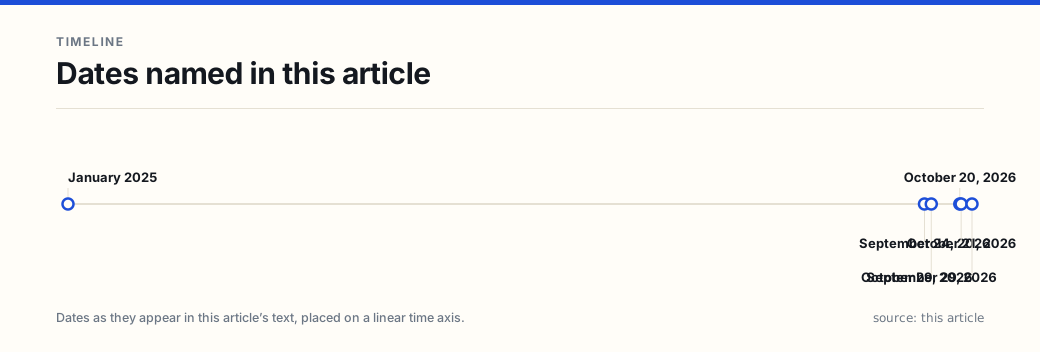
On October 20, 2026, the Justice Department pointed the public at a page on America.gov to report fraud, and paired it with a program that pays for tips. The page itself is not a form. It is a task-force explainer with a big “Start your report” button, and what that button does — along with what the page promises about your data — is worth understanding before you type anything personal into it.
Update, October 29, 2026: the address has split into two. As of this pass, america.gov/fraud is a chooser page — “Choose what you want to report” — with one card for benefits fraud under a White House heading and a second for voter fraud under a Department of Homeland Security heading. The task-force explainer described below, including the “Report fraud, waste, or abuse” heading, the Treasury handoff, the routing list and the reward language, now lives at america.gov/benefits-fraud. Everything in this article about the page’s promises, its demo walkthrough and its routing still applies to that page; the direct link to it is now one click from the old address — the card’s ‘Learn more’ link. The voter-fraud door is a separate program with a separate figure, covered in Reporting Voter Fraud to the Federal Government. The chooser page carries no explanation of the difference between the two, and the portal’s changelog has no entry for the split.
The short version: the page promises encryption, an optional name, and a report that goes “straight from your browser to the Treasury Department.” The portal’s own privacy policy, last updated October 20, 2026, describes the handoff in more detail and is the better document to read. What follows separates what the page promises from what the government’s other documents actually commit to.
What the page promises
The benefits-fraud page is headed “Report fraud, waste, or abuse” and opens with a single line: “Tell us what happened and we’ll send it to the right federal office for review.” Two claims sit underneath it:
- “Your report is encrypted and your name is optional.”
- “It goes straight from your browser to the Treasury Department. America.gov keeps nothing.”
Only the second is corroborated, and only in part. The privacy policy says the report form is the Treasury Department’s Fraud.gov service, and that what you enter — your description, any contact information you choose to give, any files you attach — goes directly from your browser to Treasury. It does not pass through the portal’s servers, is not seen by its AI model, and is not stored by the portal, which records only whether the connection succeeded, how long it took, and the type of any error. From the moment you submit, Treasury’s privacy policy governs the file.
The encryption claim is the page’s own. The privacy policy does not describe the fraud form as encrypted; it describes security measures generally, and elsewhere says plainly that this particular data does not reach the portal’s servers at all. Treat “encrypted” as the operator’s assurance about a system you cannot inspect, not as a published specification.
One sentence in that policy deserves to be read twice: attached files “are sent as you provide them; Rampart does not check or redact them.” Rampart is the classifier the portal runs on ordinary PDF questions, and even there the policy describes it as a best-effort attempt to detect some types of personal information. It does not run on fraud-report attachments.
The numbers the page now carries
The benefits-fraud page has also acquired a scoreboard. Under “By the numbers,” it reports what nine partner agencies say they uncovered, stop each year, and recovered: $260.7 billion uncovered since January 2025, $72.0 billion stopped per year, and $58.9 billion recovered — with health and human services programs, including CMS, accounting for $96.4 billion of the first and the Small Business Administration for $122.9 billion.
Three cautions on those figures. They are the government’s own, sourced on the page to “the White House Fraud Ledger, updated September 24, 2026,” and not independently audited here. “Uncovered” is an estimate of fraud identified, which is a different quantity from money recovered — the gap between the first and third column is the story, not a rounding error. And the agency rows do add up, to within display rounding: the uncovered column totals $260.692 billion against a stated $260.7 billion, the recovered column $58.936 billion against $58.9 billion, and the stopped-per-year column $72.089 billion against a stated $72.0 billion — the one column where a reader checking the arithmetic lands on a different last digit than the page does. The figures say nothing about any individual report: a tip is not a share of a total.
The three-step walkthrough is an illustration
The page sets out a three-step process: describe what happened; review a compiled report and attach up to 5 documents or photos; submit and “download a copy,” receiving a reference number. Then a “what happens next” sequence: Treasury reviews, investigators may reach out, action follows, and you may qualify for a reward.
Read the page’s own markup and the picture changes. The walkthrough ends on a placeholder — the submission screen reads “Reference number DEMO-2026-001” — and the routing section immediately below it is explicitly an animation, carrying play and pause controls. Every “Start your report” button on the page links to the America.gov assistant with a pre-filled question rather than to a form. So the page is showing you a product demonstration, not describing the field-by-field reality of what you will see.
That does not make the process fictional. The guidelines for the reward program require a completed and signed intake form submitted through america.gov/fraud, which tells you the real submission is more formal than a chat message, and the policy’s account of a browser-to-Treasury handoff tells you where it ends up. But if you are preparing documents on the assumption that five attachments and a reference number are the whole interface, expect a form with fields, and expect to attest to what you submit.
Where the report goes, and who reads it
Two official documents answer this differently, and the difference is worth stating rather than smoothing over.
- The page says: “Treasury Department reviews it — your report is reviewed and sent to the federal office best situated to act on it,” and that “each federal office handles different kinds of fraud.”
- The Justice Department’s FAQ says: “Whistleblower submissions made through the online portal are reviewed by staff under the direction of the Assistant Attorney General for the National Fraud Enforcement Division.”
Both can be true in sequence — Treasury’s system receives the file, fraud division staff assess the tip — but neither document says which happens first, and this article will not guess. The routing list is the page’s alone; the FAQ does not mention it. That list says “20+ offices, including” and then names 19, among them the HHS Office of Inspector General, CMS, the VA and SBA inspectors general, the Department of War’s inspector general, the GSA inspector general, the IRS Whistleblower Office and IRS Criminal Investigation, FinCEN, SEC Enforcement, the CFTC, the FTC, the Justice Department’s Antitrust, Criminal and Civil divisions, the USDA, DHS and EPA inspectors general, and NHTSA.
The stated possible outcomes are concrete, and worth setting expectations against: “a criminal charged, a payment stopped, or a provider suspended.” Those are the three the page lists. An apology, a refund to you personally, or a correction to your own record are not among them — this channel is about the program’s money, not your dispute with a company.
What the page will not do
It is not a case, and it is not a claim. A report is a tip to an enforcement office. It does not make you a party to anything and does not by itself entitle you to a share of a recovery. The civil route — a False Claims Act action with a statutory relator share — is a separate filing with its own deadlines.
It does not promise a reply, or a speed. The FAQ says whistleblowers “may or may not be contacted for additional information.” Nothing on the page commits to a response time, and nothing suggests it is monitored like an emergency line.
It is not a general crime-reporting channel. The FAQ is direct: tips sent through this channel “do not lead to the investigation of non-fraud tips,” and it points people to local law enforcement or the FBI’s Internet Crime Complaint Center at ic3.gov for other crimes.
It does not guarantee anonymity. The page treats your name as optional, and that is a real choice for someone who only wants the conduct looked at. It is not the same as being unknown to the government. A reward requires contact information and verified identity, and the program’s guidance allows submission anonymously to the department only through an attorney. The FAQ’s confidentiality promise is about public disclosure: the department will not publish information that could reasonably be expected to reveal a tipster’s identity, “except as required by law, Department policy as determined by the Department in its sole discretion,” or unless disclosure is required in a proceeding — including to a defendant.
It does not protect you from how you got the information. The program’s terms say that submitting information obtained in violation of law “does not provide that individual with any protection from prosecution for unlawfully obtaining the information.” They also warn that false statements in a submission can be prosecuted as criminal false statements or perjury. Neither point appears on the report page.
Where the report goes matters more than the URL
Three names show up in the official material for what looks like one channel, and the differences are real:
- america.gov/fraud is the page you land on: a chooser that asks whether you are reporting benefits fraud or voter fraud.
- america.gov/benefits-fraud is the task-force explainer behind the first card, and the page the Justice Department’s guidance describes when it names america.gov/fraud.
- The form that flow ends in is Treasury’s Fraud.gov service, per the portal’s privacy policy — the button starts the assistant, and the assistant is what hands off to Treasury.
- fraud.gov, typed on its own, resolved to the White House’s “Fraud Ledger” — a docket page of enforcement actions with the same report link — as of October 21, 2026. Redirects change; check the address bar rather than trusting the name.
None of that is a contradiction, but it does mean the domain in the address bar is the only thing telling you that you are in the right place. That check is worth doing every time, and the twelve tests for it are in Is That Really America.gov?.
Three things to refuse
No official document describes these approaches. But a page that advertises money for information is the kind of thing that attracts people wanting a share of it, so here is what to refuse if it arrives:
- A processing, filing or “release” fee. No fee is mentioned on the page or in the program’s guidance. A request for payment to move a report along is not part of any published process.
- An intermediary who wants your documents before you have decided anything. The program expressly contemplates that a tipster may be represented by a lawyer, so counsel is legitimate. Someone who found you, not the reverse, is a different proposition — engage representation yourself or not at all.
- An inbound call or message quoting a reference number and asking you to “verify” identity or bank details. The reference number is something you keep for your records. Treat any unsolicited contact about your report as unverified until you have called an agency back on a number you looked up yourself.
What to do before and after you submit
- Decide what the report is for. If you want the conduct investigated, the report is the tool. If you want a share of a recovery, that is a different filing with a lawyer and a deadline; if you want both, the sequence is a legal question.
- Write the facts, not the conclusion. Dates, the specific claim or payment, the person or entity, and how you know. Vague reports are the ones that go nowhere.
- Attach the minimum that proves the point, redacted. Five files is a limit, not a target, and nothing strips identifiers on the way out.
- Read the attestation before you sign it. The program requires a completed and signed intake form, and the terms treat a knowingly false or incomplete submission as a bar — and potentially a crime.
- Keep your own copy and the reference number. That is your only record that you filed, and the FAQ warns that an award may be denied on the basis that a tip did not come through the established portal.
- Do not file the same report repeatedly. The terms provide for a permanent bar on people who submit frivolous or fraudulent material, including three or more found frivolous. Under the first-submission rule, an identical second report is not original information either.
- If you face retaliation, put it in writing and date it. The terms say retaliation against a tipster is a factor the department can weigh when assessing an entity’s cooperation — which means the record has to exist in your own file.
- If the subject is tax, securities or a consumer scam, use the channel built for it. The routing list above shows where tax matters land; a consumer scam or identity theft belongs at the FTC’s complaint system at reportfraud.ftc.gov, which also starts the recovery plan at identitytheft.gov.
The reward rules themselves — the $10,000 to $30,000 range, the subject-matter list, the exclusions that disqualify compliance staff and participants — are set out separately in The New Federal Reward for Reporting Fraud.
The bottom line
America.gov now fronts a real federal fraud intake, and the routing claim is the valuable part: one description, sent to an office that can act rather than to whichever agency you guessed. What the page does not give you is a receipt that something will happen, a lawsuit, an anonymity guarantee, or immunity for how you learned what you know. Type the facts, attach less than you are tempted to, read what you are signing, and keep the reference number.
The rest of this series
- Reporting Voter Fraud to the Federal Government — the second door on the same page: the $1 million reward, and the program that has not been published.
- The New Federal Reward for Reporting Fraud — the $10,000 to $30,000 program, its tests and its exclusions.
- What America.gov’s Own Terms Say — the portal’s admissions about accuracy, privacy and what it is not.
- Is That Really America.gov? — twelve checks that separate the real portal from an impostor.
- What Is America.gov? — what launched on September 29, 2026, and what is still only a roadmap.
- The network’s official government resources directory collects the primary sources behind these guides.
This article is general information about a federal reporting channel, not legal advice. It is AI-written and independently AI-reviewed before publication; the review standard and this article’s findings are recorded in the network’s editorial review log.
Frequently asked questions
- Is america.gov/fraud the same thing as fraud.gov?
- Not quite, and the agencies use the names loosely. Since the last week of October 2026, america.gov/fraud is a chooser page asking what you want to report; the task-force explainer behind its benefits-fraud card sits at america.gov/benefits-fraud. As of October 29, 2026, typing fraud.gov still redirected to the White House's 'Fraud Ledger' page, which links back to america.gov/fraud — a redirect that could change. The portal's privacy policy, last updated October 20, 2026, says the report form itself is the Treasury Department's Fraud.gov service. Whichever name you arrive by, the file for a benefits-fraud report is created in Treasury's system, not on the portal's servers.
- If I leave my name off, is the report still useful?
- The page treats your name as optional, and the government does not say an unnamed report will be ignored. What is clear is that it cannot be paid: the reward terms require a person submitting on their own behalf to give contact information the department can use to reach and verify them, and they require identity disclosure and verification before any award. Submitting anonymously to the department requires representation by an attorney. An unnamed report also gives an investigator no way to ask you a follow-up question.
- Can I attach medical records or a patient's file?
- Nothing on the page stops you, and that is the problem. Its privacy policy says files attached to a fraud report are sent as you provide them, and that the Rampart scrubber, which makes a best-effort attempt to remove some types of personal information from ordinary PDF questions, does not check or redact report attachments. Send the pages that show the conduct, redact names, member IDs and account numbers, and remember that Treasury's privacy policy governs the file once it arrives.
- Is submitting a report the same as filing a lawsuit or a claim?
- No. A report is a tip to an enforcement office. It does not start a case, create a right to a share of any recovery, or make you a party to anything. The route to a share of a civil recovery is a separate action under the False Claims Act, filed by you or your lawyer, under seal, with its own deadlines and its own relator share set by statute. Reporting first can help or hurt that case depending on timing, which is a question for a lawyer, not a form.
- What if what I want to report is not fraud at all?
- The Justice Department's FAQ says tips sent through this channel do not lead to investigation of non-fraud matters, and directs people to local law enforcement or the FBI's Internet Crime Complaint Center for other crimes. Consumer scams and identity theft have their own intake at the Federal Trade Commission, which also produces the recovery plan at identitytheft.gov.
- How fast will anyone respond?
- No published response time exists, and nothing on the page promises one. The FAQ says submissions are reviewed by staff under the direction of the assistant attorney general for the National Fraud Enforcement Division, and that whistleblowers may or may not be contacted for additional information. A report is not a call for emergency help and should not be treated as one.
Sources
Each source is a primary or official reference, checked before publication. Links open the original.
- America.gov — 'Report fraud,' the chooser page now served at america.gov/fraud ('Choose what you want to report,' with a benefits-fraud card under a White House heading and a voter-fraud card under a Department of Homeland Security heading; no explanation of the difference between the two) — america.gov/fraud
- America.gov — 'Report fraud, waste, or abuse,' the task-force page now served at america.gov/benefits-fraud (report encrypted, name optional, report routed to the Treasury Department, the illustrated three-step walkthrough and its sample reference number, the '20+ offices' list, and the 'By the numbers' agency ledger sourced to the White House Fraud Ledger of September 24, 2026) — america.gov/benefits-fraud
- America.gov — Privacy policy, 'Last updated: October 20, 2026' (the report form is the Treasury Department's Fraud.gov service; what you enter goes browser-direct to Treasury and is not seen by the portal's SI model or stored by America.gov; attachments are not checked or redacted; Treasury's policy governs) — america.gov/privacy-policy
- U.S. Department of Justice — 'Criminal Tip Rewards Pilot Program — FAQs,' 'Updated October 20, 2026' (a completed submission through the portal strongly encouraged, with an award possibly denied for filing elsewhere; no investigation of non-fraud tips; review by Fraud Division staff; no guarantee of contact) — justice.gov/fraud/criminal-tip-rewards-pilot-program-faqs
- U.S. Department of Justice — 'National Fraud Enforcement Division Criminal Tip Rewards Pilot Program,' the program guidance and terms, 'Updated October 20, 2026' (a completed and signed intake form through america.gov/fraud permanent bar for frivolous or fraudulent submissions; confidentiality and its limits; no protection from prosecution for unlawfully obtaining information) — justice.gov/fraud/national-fraud-enforcement-division-criminal-tip-rewards-pilot-program
- U.S. Department of Justice, Office of Public Affairs — press release 26-1231, October 20, 2026, announcing the reward program and directing the public to america.gov/fraud — justice.gov/opa/pr/justice-department-announces-innovative-whistleblower-rewards-program-combat-fraud
- The White House — 'The Fraud Ledger,' the task-force docket page that fraud.gov resolved to on October 21, 2026, carrying the same report link (re-checked October 29, 2026, when it still resolved there and still linked to america.gov/fraud) — whitehouse.gov/fraud
- Federal Trade Commission — fraud reporting at reportfraud.ftc.gov and identity-theft recovery at identitytheft.gov; the FBI's Internet Crime Complaint Center at ic3.gov, named in the Justice Department FAQ for crimes that are not fraud