One Contact at Social Security: What the New Identity Theft Law Does, and What It Does Not
Public Law 119-119 gives SSA misuse victims a single named contact from April 5, 2027. No new number, no payout, no deadline. What to do before then.
The short answer: A new federal law gives identity theft victims one named point of contact at the Social Security Administration instead of a call queue — but only from April 5, 2027, only for a case where your number was actually misused — for example, to obtain benefits or to change your SSA records — or your card was lost in the mail, and it comes with no new Social Security number, no compensation and no deadline for SSA to finish. The steps that actually limit the damage — an FTC identity theft report, a credit freeze at all three bureaus, an IRS identity protection PIN — run on separate clocks and should not wait for the law.
That gap between what the headline says and what the statute does is the whole story, and it decides how you should spend the next week.
What the law actually requires
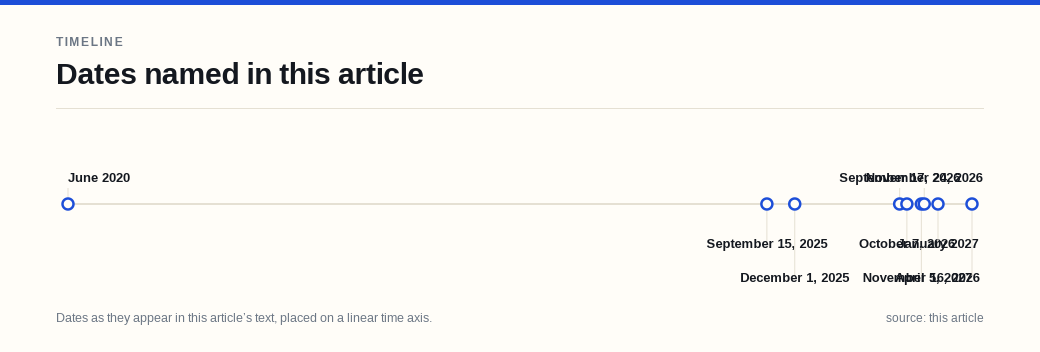
The bill was H.R. 5345, the Improving Social Security’s Service to Victims of Identity Theft Act. It was introduced on September 15, 2025, passed the House by voice vote on December 1, 2025, passed the Senate without amendment by unanimous consent on September 17, 2026, and was signed on October 7, 2026 as Public Law 119-119 (140 Stat. 1063). It adds a new section 714 to title VII of the Social Security Act, codified at 42 U.S.C. 915.
The operative sentence requires the Commissioner of Social Security to “establish and implement procedures to ensure that any individual whose social security account number has been misused … or whose Social Security card has been lost in the course of transmission to the individual has a single point of contact at the Social Security Administration throughout the resolution of the individual’s case.”
Three details in that text do most of the work:
- Who the contact is. Not a dedicated agent per victim, but “a team or subset of specially trained employees” with authority to coordinate with other SSA units and accountability “until its resolution.” Staffing may change, provided procedures preserve continuity of records and case history and notify you when appropriate.
- What triggers it. The number must have been misused — the text’s examples are fraudulently obtaining benefits under title II, VIII or XVI, misuse that “affects an individual’s records at the Social Security Administration,” or misuse that prompts a request for a new number — or the card must have been lost in transit. Exposure alone is not in the list.
- When it starts. “180 days after the date of enactment.” From October 7, 2026, that lands on April 5, 2027, a Monday.
| The law does | The law does not |
|---|---|
| Assign a named SSA team to a misuse or lost-card case | Grant a new Social Security number |
| Require the team to track the case and coordinate across SSA units | Pay compensation, damages or reimbursement |
| Require continuity of records when staff change | Set a deadline, or a penalty, for resolving a case |
| Cover a card lost in the mail | Reach your credit file, bank accounts or tax return |
| Take effect April 5, 2027 | Apply before that date |
The “does not” column is not a criticism of the bill. It is a description of a deliberately narrow fix to one specific complaint — that a victim gets transferred from unit to unit and has to retell the story each time. The statute addresses routing and accountability. It does not create a recovery program.
Why the date matters more than the signing
This bill has been introduced, and passed one chamber, more than once. S. 3731, a near-identical predecessor, passed the Senate by unanimous consent in June 2020 and went nowhere in the House; its text carried the same contact duty, accountability clause and 180-day effective date, but not the lost-card category this version added. SSA’s own legislative bulletin from that year described the same three elements, which is a useful check on what the provision was always meant to do.
As of November 24, 2026, SSA’s public fraud page and its card pages describe the Office of the Inspector General reporting route, the my Social Security account, and two account-level blocks — the eServices block and the Direct Deposit Fraud Prevention block. They do not yet describe a single-point-of-contact process. That is consistent with a duty that has not taken effect, and it is also the practical answer to “can I ask for this now”: the statutory right is not there yet, and neither is the published procedure.
What you can do in the meantime is make the handoff cheap. When you call, ask for a reference or case number and write down the date, the number and what you were told. The law’s promise is continuity of records — which only helps if there is a record.
Which door your situation belongs to
Identity theft is not one problem, and the agencies divide it. Use the situation, not the label.
| Your situation | Who owns it | First move |
|---|---|---|
| Number exposed in a breach, no misuse yet | No federal case exists yet | Freeze credit at all three bureaus; create a my Social Security account; SSA says no FTC report is needed at this stage |
| Your SSA earnings record shows wages you did not earn | SSA for the record, SSA OIG for the crime | Review earnings in my Social Security and request a correction; report to OIG |
| A federal return was rejected, or a W-2 or 1099 arrived from an employer you never worked for | IRS | Get an IP PIN; call 800-908-4490; file Form 14039 only if instructed |
| A new account, loan or phone line was opened in your name | FTC, the furnisher, the bureaus | Report at IdentityTheft.gov and get the report; dispute with the furnisher; consider an extended fraud alert |
| Someone is receiving Social Security or SSI benefits on your record | SSA OIG | Report through oig.ssa.gov or 1-800-269-0271; then your local office |
| Your card was lost in the mail | SSA | Request a free replacement; from April 5, 2027 the contact duty applies too |
Only two rows in that table are the new law’s business. The other four are not made faster by it, which is why the order of operations matters more than the effective date.
The records case, step by step
This is the case the new contact is built for, and it is the one most people mishandle, because a fraudulent wage report looks like a credit problem and is not.
- Check the record. Sign in to my Social Security and use “Review your full earnings record now.” The question is whether some year shows wages you did not earn — the same warning sign the IRS lists when a Social Security account shows unexpected wages.
- Request a correction. SSA’s own FAQ says you may be able to do this online from the earnings record page (“Request a correction online”), and that not everyone is eligible. If the online route is unavailable, the correction is handled at a local office: SSA verifies your identity and asks you to declare under penalty of perjury that the earnings are not yours, and in some cases requires Form SSA-7008, Request for Correction of Earnings Record, plus documentation.
- Bring the paper. SSA recommends copies of your filed tax returns for the years in question. If you are asserting that certain wages are yours, W-2s do that job.
- Report the crime separately. A records correction is not a criminal report. The OIG takes the latter at oig.ssa.gov or on 1-800-269-0271, staffed 10 a.m. to 2 p.m. Eastern, Monday to Friday, excluding federal holidays.
- Expect consequences you did not ask for. SSA warns that changes to an earnings record can affect eligibility, entitlement, benefit estimates and determinations — in both directions, since removing someone else’s wages can lower a benefit estimate built on them.
Two sentences from SSA’s own material are worth reading twice, because they bound what any point of contact can do. The first: “Social Security does not handle identity theft issues, but we can help correct your Social Security records.” The second, from the same answer: if you think you have been a victim of identity theft, contact the FTC. The new law does not change either sentence. It changes who you talk to about the records half.
What “no new number” actually means
The statute mentions a new number only as a trigger: a person whose number was misused “in a manner that prompts the individual to request a new social security account number” is covered by the contact duty. Requesting is not receiving.
The decision stays where it was. SSA’s page opens with “In rare cases, you may qualify for a new Social Security number,” and the sequence it describes is: report the number as stolen, try to fix the problems caused by the misuse, and if you are still affected, make an appointment to be assessed. You need proof of identity, age, and citizenship or immigration status, and evidence that you are still having problems because of the current number. An agent is then supposed to explain the pros and cons.
Publication 05-10064 is blunter about the three things a new number will not do. It cannot be had just because the card was lost or stolen with no evidence of use; it is not a way out of bankruptcy; and it is not a way to avoid the law or a legal responsibility. It also makes the trade explicit: the IRS, state motor vehicle agencies, banks and credit reporting companies keep records under the old number, so “using a new number won’t guarantee you a fresh start” — and a thin file under the new number can make credit harder to get, not easier.
That is why the honest answer to “should I get a new number” is usually no, and why the law’s narrow scope is not the obstacle.
The tax clock, which is running now
If the misuse touched your tax filings, the IRS side has a deadline that has nothing to do with April 2027 — the filing season.
An identity protection PIN is a six-digit number that must be entered on Forms 1040, 1040-NR, 1040-PR, 1040-SR and 1040-SS; without it, an e-filed return is rejected or a paper return is delayed. It is valid for one calendar year, a new one is generated each year, and it is generally viewable online from mid-January to mid-November. Anyone with an SSN or ITIN who can verify their identity is eligible, which means you do not have to wait to be a victim to get one.
The timing problem this year is logistical. The IRS page for the program carries a notice that the online IP PIN system will be offline from Monday, November 16, 2026 until mid-January 2027 — the stretch in which people would normally request one for the coming season. The routes that remain, per the IRS’s own FAQ, are:
- Form 15227, if adjusted gross income is below $84,000 for an individual or $168,000 for a married couple filing jointly. The phone number on the form is used to verify identity before a PIN is issued.
- A Taxpayer Assistance Center appointment at 844-545-5640, with identity documents in hand, if you are ineligible for Form 15227.
- 800-908-4490 if you already had a PIN and lost it — an assistor verifies your identity and mails the PIN to your address of record within 21 days.
Check the system’s status before choosing a route; a maintenance window is a statement about the tool, not a promise about the alternatives.
The credit clock, which is free and immediate
A credit freeze is free, available to anyone for any reason, has no effect on your credit score, and lasts until you lift it. It has to be placed with all three bureaus — Equifax, Experian and TransUnion — because a freeze at one does not bind the others. A fraud alert is the lighter tool: an initial alert lasts a year and is placed with one bureau, which must notify the other two; an extended alert lasts seven years but requires a completed FTC identity theft report or a police report.
The mechanics, and the statutory deadlines behind them, are covered in Credit Freeze, Fraud Alert, or Credit Lock. What matters here is only the sequencing: the freeze takes minutes, costs nothing, and closes the account-opening door while you work out whether anything else happened.
The next 72 hours, in order
- Freeze all three bureaus. Free, reversible, no score impact. Do this even if you are unsure whether anything was opened.
- Create a my Social Security account if you do not have one, and review your earnings record. An account you create is an account someone else cannot.
- Report at IdentityTheft.gov if an account, loan, benefit or return was actually used or opened. That report is what an extended fraud alert and most furnisher disputes hang on.
- If tax: start the IP PIN route that is still open during the outage, and call 800-908-4490 if a return has already been rejected.
- If SSA records: request the earnings correction, and report the misuse to the OIG.
- If the card was lost in the mail: request the free replacement now, and note the date — that is one of the two categories the 2027 contact duty covers.
- Write it all down in one place: date, agency, person, reference number, what you were told.
What to document, and why the law makes it worth doing
The statute’s actual promise is continuity — that the team handling your case will have your case history, and that you will be notified when staffing changes. That promise only pays off if the history exists somewhere other than your memory.
Keep, at minimum: the FTC report number and date; the date and method of each bureau freeze and lift; every SSA notice, with the date printed on it; the date you reported to the OIG and any confirmation number; the years and amounts you are disputing on the earnings record; and the name or office of each person you spoke to, with the date. A one-page log with columns for date, agency, contact and outcome is enough, and it is the difference between “I called someone in March” and a case someone can pick up.
Where this leaves the decision
If your number was misused in a way that touches SSA’s records, or your card went missing in the mail, the new law is real and it is narrow, and from April 5, 2027 it gives you something the current process does not: one team accountable until the case closes. Until then, and for everything outside that scope, the recovery work is the same as it was last year — freeze, report, PIN, correct the record, document.
If you are being asked to pay a service to “handle” this, the free routes above are the ones the agencies themselves describe. Nobody needs to be paid to file an FTC report or place a freeze.
Frequently asked questions
- Does the new law give me a new Social Security number?
- No. The statute lists a person who is prompted to request a new Social Security number as one category of victim who gets a point of contact; it does not grant the number. A new number remains a discretionary decision under SSA's existing policy, which describes it as available in rare cases and only after you have tried to fix the problems caused by the misuse and are still being harmed.
- Can I use the single point of contact right now?
- Not as a statutory right. The amendment takes effect 180 days after enactment, which is April 5, 2027, because the law was signed on October 7, 2026. Before that date you are dealing with SSA's ordinary channels: a local office, the 1-800-772-1213 line, and the Office of the Inspector General's fraud reporting route.
- My number was in a data breach. Does this law cover me?
- Not on that fact alone. The text reaches an individual whose number has been misused — for example to obtain benefits fraudulently or in a way that affects SSA records — or whose card was lost in the mail. SSA's own guidance draws the same line: if your number has been exposed but not used, it says you do not need to file an FTC identity theft report, and the protective steps are checking, freezing and monitoring your credit.
- Will Social Security compensate me for money I lost?
- Nothing in the text provides compensation, reimbursement or damages, and it creates no payment program. The duty it imposes is procedural: assign a trained team, track the case, coordinate with other SSA units and stay accountable until the case is resolved.
- Does SSA have a deadline to finish my case?
- No. The statute requires coordination 'to resolve issues as quickly as possible' and accountability 'until its resolution', but it sets no number of days and no consequence for missing one. That is the main practical difference between this law and, say, the credit-freeze deadlines in the Fair Credit Reporting Act.
- What if my Social Security card was lost in the mail?
- You are inside the statute's second category, and a replacement card is free. Until April 5, 2027 the request goes through the ordinary replacement process; from that date the single point of contact duty also applies. A lost card by itself is not a route to a new number — SSA says a card that is lost or stolen with no evidence of use does not qualify.
- Does my state add anything on top of this?
- Possibly. Identity theft, credit and consumer protection are areas where states legislate separately, and remedies, notification duties and freeze procedures vary by state. This article describes federal law only; for state-specific remedies, the state attorney general's office is the starting point.
Sources
Each source is a primary or official reference, checked before publication. Links open the original.
- Public Law 119-119, 140 Stat. 1063 (approved October 7, 2026) — 'Improving Social Security's Service to Victims of Identity Theft Act', adding section 714 to title VII of the Social Security Act at 42 U.S.C. 915. Read for: the two triggering categories (a social security account number misused, including to fraudulently obtain title II, VIII or XVI benefits, in a manner affecting SSA records, or in a manner prompting a request for a new number; or a card lost in the course of transmission); the requirement that the contact consist of 'a team or subset of specially trained employees'; the accountability-until-resolution clause; the continuity-of-records and notification conditions when staffing changes; and the effective date, '180 days after the date of enactment' — govinfo.gov/content/pkg/PLAW-119publ119/html/PLAW-119publ119.htm
- Congress.gov, H.R. 5345, 119th Congress — sponsor Rep. David Kustoff (R-TN-8), introduced September 15, 2025; reported by Ways and Means October 31, 2025 (H. Rept. 119-360); passed the House by voice vote December 1, 2025; passed the Senate without amendment by unanimous consent September 17, 2026; presented to the President September 29, 2026; became Public Law 119-119 on October 7, 2026. Read for: the action dates and the CRS summary of the enacted text — congress.gov/bill/119th-congress/house-bill/5345
- Social Security Administration, legislative bulletin, June 19, 2020 — SSA's own analysis of S. 3731, the predecessor bill that passed the Senate in the 116th Congress. Read for: SSA's description of the same three elements — the team or subset of specially trained individuals, tracking cases to completion with coordination across units, accountability until resolution, and the 180-day effective date. Note what the predecessor did not contain: its operative clause covers a misused account number only, with no lost-card category, which is the one substantive addition in Public Law 119-119 — ssa.gov/legislation/legis_bulletin_061920.html
- Social Security Administration, 'Fraud Prevention and Reporting' — read for: the OIG reporting route (oig.ssa.gov) and the fraud hotline 1-800-269-0271, 10 a.m. to 2 p.m. Eastern, Monday through Friday excluding federal holidays; the eServices block and the Direct Deposit Fraud Prevention block, both of which require a local office visit to remove; the instruction to create a my Social Security account; and the distinction between misuse, which goes to IdentityTheft.gov, and exposure without misuse, which does not require an FTC identity theft report — ssa.gov/fraud
- Social Security Administration, frequently asked questions, 'What do I do if I need to remove earnings that are not mine from my Social Security record?' (KA-10123) — read for: the online correction route inside my Social Security ('Review your full earnings record now', then 'Request a correction online'), the note that not everyone is eligible online, the in-person route with a declaration under penalty of perjury, Form SSA-7008 as a possible requirement, the recommendation to bring filed tax returns for the years in question, and the agency's own statement that 'Social Security does not handle identity theft issues, but we can help correct your Social Security records' — ssa.gov/faqs/en/questions/KA-10123.html
- Social Security Administration, 'Requesting a new number' — read for: 'In rare cases, you may qualify for a new Social Security number'; the requirement to report the number as stolen first and to have attempted to fix the problems caused by the misuse; the listed grounds, with the identity theft route described separately from the other reasons; the appointment requirement and the proof of identity, age and citizenship or immigration status; and the statement that an agent will explain the pros and cons — ssa.gov/number-card/requesting-new-number
- Social Security Administration, Publication No. 05-10064, 'Identity Theft and Your Social Security Number' (current edition as served at the URL; the printed edition line could not be read directly in this environment because the host returns 403 to non-browser clients) — read for: 'If you've done all you can to fix the problems resulting from misuse of your Social Security number, and someone is still using your number, we may assign you a new number'; the three situations in which a new number cannot be obtained, including a card lost or stolen with no evidence that someone is using the number; and the warning that other agencies and businesses keep records under the old number, so a new number may create new problems — ssa.gov/pubs/EN-05-10064.pdf
- Social Security Administration, 'Replace Social Security card' — read for: 'You can request a free replacement card', the 5-to-10-business-day mailing estimate, and the statement that a physical card is usually unnecessary if you know the number — ssa.gov/number-card/replace-card
- Social Security Administration, my Social Security — read for: the Login.gov and ID.me sign-in routes, and the listed uses relevant here: requesting a replacement card, reviewing earnings for accuracy, and monitoring for unusual activity — ssa.gov/myaccount
- Internal Revenue Service, 'Get an identity protection PIN' — read for: the six-digit IP PIN definition and its purpose (preventing a return filed with your SSN or ITIN); eligibility for anyone with an SSN or ITIN who can verify identity; the validity period of one calendar year with a new PIN generated each year; the requirement to use it on Forms 1040, 1040-NR, 1040-PR, 1040-SR and 1040-SS; the mid-January-to-mid-November online viewing window; and the maintenance notice stating the online IP PIN system will be offline from Monday, November 16, 2026 until mid-January 2027 — irs.gov/identity-theft-fraud-scams/get-an-identity-protection-pin
- Internal Revenue Service, 'Frequently asked questions about the identity protection personal identification number (IP PIN)' — read for: Q4 (updated October 30, 2026) listing the two alternatives to online enrollment, Form 15227 for adjusted gross income below $84,000 for individuals or $168,000 for married filing jointly, and a Taxpayer Assistance Center appointment with identity documents, scheduled at 844-545-5640; Q8 on a lost or missing IP PIN, including the 800-908-4490 line and reissue by mail within 21 days; and the continuous versus one-time enrollment options — irs.gov/identity-theft-fraud-scams/frequently-asked-questions-about-the-identity-protection-personal-identification-number-ip-pin
- Internal Revenue Service, 'Identity theft guide for individuals' — read for: the ordered steps (stop contact, change the Online Account password, follow IRS instructions, report, follow IdentityTheft.gov recovery steps, get an IP PIN, keep records); Form 14039 as a conditional filing; the warning sign 'Social Security account shows wages you didn't earn or expect'; and 800-908-4490 for identity and return verification — irs.gov/identity-theft-central/identity-theft-guide-for-individuals
- Federal Trade Commission, Consumer Advice, 'Credit Freezes and Fraud Alerts' — read for: a freeze is free, available to anyone for any reason, lasts until lifted, does not affect the credit score, and must be placed with all three bureaus; an initial fraud alert lasts one year and is placed with one bureau, which notifies the other two; an extended fraud alert lasts seven years and requires a completed FTC identity theft report at IdentityTheft.gov or a police report — consumer.ftc.gov/articles/credit-freezes-and-fraud-alerts
- U.S. House Committee on Ways and Means, release on the signing — read for: the committee's 39-to-1 markup vote and its summary that the contact must 'track an identity theft victim's case through resolution when their SSN is misused or their Social Security card is lost in the mail' — waysandmeans.house.gov/?p=21104