The New Federal Reward for Reporting Fraud: $10,000 to $30,000, With Conditions
The Justice Department's new tip program pays $10,000 to $30,000 for fraud reports that lead to charges, but only in narrow subject areas and never on request.
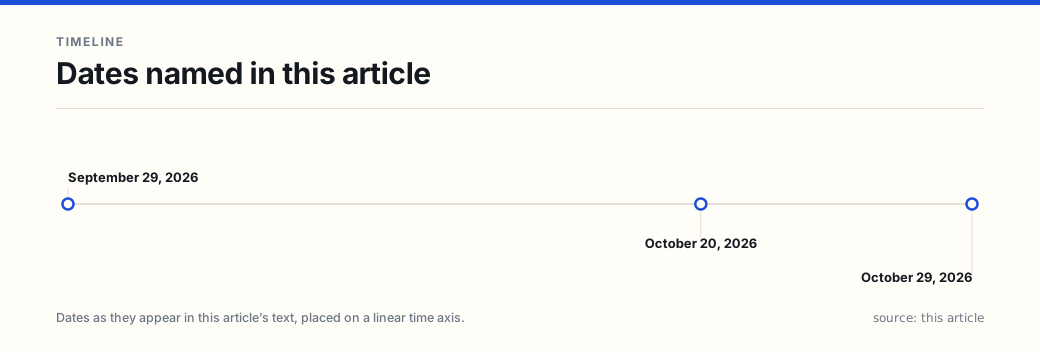
On October 20, 2026, the Justice Department announced a program that pays members of the public for fraud tips — the Fraud Whistleblower Incentive Program, or WHIP. The headline number is $10,000 to $30,000 per tip, paid much earlier than a traditional whistleblower award — normally once criminal charges are filed and unsealed, rather than after a case is fully resolved. The department describes it as “the first ever whistleblower rewards program that pays an up-front award for tips leading to criminal charges.”
That description is the department’s own, and it is the reason to read the documents rather than the coverage. A program that pays before a case ends is unusual, and the trade for that speed is a fixed range, a ceiling, and a decision the government does not have to explain or defend in court. Whether a particular tip is worth anything depends on how it satisfies a handful of eligibility tests that most summaries skip.
This is a federal program, so its rules do not vary by state. The fraud you report may still be investigated by a federal office, a state office, or both — the guidance notes that a scheme does not have to target a federal program directly if a federal program ends up bearing the loss.
What the program pays, and when
| Question | The published answer |
|---|---|
| How much | $10,000 to $30,000 for each distinct tip. The terms say rewards “of between $10,000 to $30,000 are anticipated” |
| Paid when | After the department obtains and unseals an indictment, information or criminal complaint — not after sentencing or appeals |
| Paid earlier? | The terms allow payment before unsealing if the department so decides, in its sole discretion |
| Guaranteed? | No. “Rewards are entirely discretionary and a reward is not guaranteed” |
| Appealable? | No. The determination is “neither appealable nor subject to judicial review,” made under 28 U.S.C. § 530C(b)(1)(L) |
| Minimum loss | None. The FAQ says the payment is not tied to forfeiture, so a failed scheme can still qualify |
| Duration | A pilot program, with an “initial three-year term.” The guidance does not give a start or end date |
Two of those rows matter more than the rest. The timing is the real innovation: under most reward programs a tipster waits for the case to end, including forfeiture and appeals, which can take years. Here the payment decision follows the charging decision, and the FAQ says plainly that “you do not have to wait until the defendant pleads guilty, is sentenced, and exhausts his or her appeals.”
The discretion is the price. Nothing in the documents commits the department to pay even a qualifying tip. The award is discretionary, the amount within the range is discretionary, and whether two tips count as “distinct” — and therefore whether you get one award or two — is expressly left to the department’s sole discretion.
The subject-matter box is narrower than “fraud”
This is where most readers will fall out. To be eligible for the payment at charging, the information must concern federal health care offenses and related crimes involving health care benefit programs, or fraud against patients or others in the health care industry — or fraud on programs and benefits administered by a named list of agencies:
- Agriculture (the example given is SNAP)
- Labor (the example is unemployment insurance fraud)
- Health and Human Services
- Housing and Urban Development
- Education (student aid)
- Veterans Affairs
- the Department of War
- the Small Business Administration
Within health care, the program says it will prioritize hospice, home health care, day care and special services fraud. That “prioritize” is a ranking, not a gate — but it tells you what the unit was built to look at. The guidance’s own examples are concrete: billing for services never provided, kickbacks for referrals, medically unnecessary care, and false autism diagnoses.
Fraud outside the list is still worth reporting, for the two reasons the FAQ gives: a tip about other fraud may still lead investigators into a covered area, and it may qualify under a different reward program at the agency that owns the subject. Tax fraud, securities fraud and consumer scams are each handled — and, where a reward exists, rewarded — by a different body with its own rules.
The tests your tip has to pass
The whistleblower page lists six basic criteria, and each one is a trap if you read it as boilerplate.
Voluntary. Not merely willing. The FAQ defines it by exclusion: you cannot be under a subpoena, a compulsion order, a cooperation provision of a plea or non-prosecution agreement, a pre-existing corporate leniency application or a non-compulsory Department of Justice request, and the information cannot be provided in connection with any criminal investigation or prosecution or civil enforcement action. The terms add a condition the FAQ leaves implicit: the information must come in the absence of any government investigation or threat of imminent disclosure. A useful carve-out: if your employer received a subpoena and you are not personally obligated under it, you may still be acting voluntarily.
Original. Derived from your own knowledge or your own analysis — not information the department or law enforcement already has, and not a retelling of allegations from a lawsuit or a news story. The first-submission rule follows from this: if two people send identical information, only the first submission is eligible, because the second is no longer original.
Truthful and complete. The terms require you to include what you know about your own involvement and role. Concealing it, or misstating it, is disqualifying on its own.
Timely. The FAQ ties this to the statute of limitations and to the availability of witnesses and evidence.
Cooperative. The terms require you to cooperate with the investigation and any later proceeding — truthful testimony in interviews, before a grand jury and at trial, documents, and, where asked, supervised cooperation with investigators. This is a continuing obligation, not a box on a form.
Leading to unsealed charges. The definition is mechanical: “criminal charges means the Department obtained and unsealed an indictment, information, or criminal complaint.”
Who is excluded
The FAQ’s exclusion list is introduced with “including if,” so treat it as examples rather than a closed set. You are ineligible if you are:
- an entity — a company, a partnership, any organization. Only individuals qualify
- a Justice Department or law enforcement official, employee or contractor at the time you acquired the information, or the spouse, parent, child or sibling of a Justice Department official, employee or contractor, or someone who lived in the same household as one
- an elected or appointed foreign government official
- a meaningful participant in the scheme — including someone who directed, planned, initiated, or knowingly profited from it
- someone who knowingly and willfully made a false statement, withheld material information, or obstructed the department, in the submission or in dealings with another authority
- someone who obtained the information from an excluded person, unless the tip is about that person’s own violations, or who obtained it with intent to evade a restriction
Two further disqualifications sit outside that list: a management role in the entity or unit involved can support a denial, and the terms provide for a permanent bar on people who file frivolous or fraudulent submissions — including three or more found frivolous, fraudulent or obstructive. Filing the same tip repeatedly is not a strategy.
There is one softening for culpability. A person whose role was “sufficiently limited” — the terms borrow the sentencing guideline idea of a participant plainly among the least culpable — can still be eligible at the department’s discretion, with the role factored into the amount. Whether a given person clears that line is a judgment for a lawyer; the safe reading is that anyone who knowingly profited has a problem, and the guidance does not offer a formula for the cases in between.
The exclusion that catches professionals is separate and buried in the definition of original information. Information is not original if you acquired it because of your position as a director, officer, trustee or partner, or because someone in such a position told you or you learned it through the entity’s internal processes; if your principal duties involve compliance or internal audit; or if you acquired it through an audit, accounting, compliance or internal-investigation relationship, including work done for the entity by an outside accounting firm. The exceptions the guidance attaches are narrow, and they attach to the position-based clause rather than to the audit-and-accounting one: a reasonable belief that disclosure is necessary to prevent imminent harm to national security, a violent crime, or imminent financial or physical harm to others, including patients in a health care setting; a reasonable belief that the entity will impede the investigation; and a route where you first report to the audit committee, chief legal officer, chief compliance officer or your supervisor and at least 120 days pass.
If you are the compliance officer, in other words, the order in which you report is part of the legal question, not an administrative detail.
Two things about anonymity, and one about money
The form is not a confidentiality agreement. The report page says your name is optional. A reward is paid to a person the department can identify: the terms require a person submitting on their own behalf to provide contact information and identity verification, and require disclosure and verification before any award is paid. To submit anonymously to the department itself you must be represented by an attorney, who must certify that they verified your identity, reviewed the information with you, and that it is true, correct and complete to their knowledge. If you want an anonymous route, the lawyer is not optional.
Confidentiality is not secrecy. The FAQ says the department will not publicly disclose information that could reasonably be expected to reveal a tipster’s identity — except as required by law or department policy, which the department determines, or unless and until disclosure is required in a proceeding, including to a defendant. The terms also allow sharing with federal, state, local, tribal and international enforcement agencies where the department determines that sharing is necessary to accomplish a valid law-enforcement purpose or to protect the public.
The portal’s own wording is broader than the guidance. The report page tells readers they may qualify “if you include your contact info and your report leads to criminal charges or recovering money stolen by fraudsters.” The terms condition the $10,000 to $30,000 on criminal charges, unsealed. The guidance does not explain how a report that recovers money without producing charges fits the program — so read the terms, not the banner, when the amount matters.
How this compares with a False Claims Act suit
These are different instruments, and the difference is not just the dollar amount.
| New tip program | False Claims Act suit | |
|---|---|---|
| Forum | Criminal investigation | Civil action, filed under seal |
| Your share | Fixed range, $10,000–$30,000 per distinct tip | 15–25% of proceeds if the government intervenes (capped at 10% where the action rests on certain public disclosures the relator did not originate); 25–30% if it declines |
| When you are paid | After charges are unsealed, or earlier at the department’s discretion | After recovery, often years later |
| Control | None — discretionary, not appealable | A relator has statutory rights, and counsel |
| Ceiling | $30,000 per tip, subject to discretion | No fixed ceiling |
The percentages are set by statute at 31 U.S.C. § 3730(d) and depend on whether the government takes over the case. The practical point for a reader weighing both: a qui tam case is built for large, documented overpayments and takes years; this program is built for information that can produce a criminal charge quickly, and it caps what that speed is worth. The department says participants in the new program remain eligible for other reward programs, so the paths are not exclusive — but the first-submission rule and the “original information” test mean the sequencing deserves advice, not improvisation.
Two silences, and one warning
- No tax guidance. Neither the terms nor the FAQ mentions tax treatment, withholding or reporting. Nothing in the documents supports a net-of-tax estimate.
- No timeline for a decision. The FAQ says the department “will promptly determine in its sole discretion” whether to pay after unsealed charges, and that eligible individuals “will soon thereafter be contacted.” There is no deadline, and no remedy if contact never comes.
- No fee, but a required channel. No fee is mentioned anywhere in the guidance or on the page. What the guidance does require is the portal: the FAQ warns that an award may be denied solely because a tip did not come through it. A tipster may be represented by a lawyer, but no paid intermediary is required — so anyone who presents themselves as an official “processor,” demands an upfront fee, or asks for your documents before you have decided anything is selling something the government is not selling.
If you have something to report
- Write it down before you write it up. Dates, names, the specific billing or claim at issue, and how you know. The program rewards specific, original information; a summary of what you suspect is not that.
- Do not obtain anything you are not entitled to. The guidance says submitting information you obtained in violation of law does not protect you from prosecution for how you obtained it. Reading a file you were given access to is different from taking one you were not.
- Preserve, do not forward. Keep your own copies of what you already lawfully have. Do not email records to a personal account, and do not test the scheme by submitting a claim yourself.
- Redact before you attach. Attachments to a report are not scrubbed on the way out. Send the pages that show the conduct, not the whole file, and take out patient names, member IDs and account numbers first.
- Check the subject-matter list and the clock. If what you have is a tax or securities matter, the right door is a different agency, and the earlier you go through it the better your “original” claim.
- If you are inside the company, get advice on sequence first. The 120-day internal-reporting route exists, and using it in the wrong order can cost you the eligibility you were trying to protect.
- File through the portal, on the right branch of it. Submission is made through america.gov/fraud. Since the last week of October 2026 that address is a chooser — benefits fraud or voter fraud — and this program is reached through the benefits-fraud card, not the voter-fraud one. The FAQ warns that an award can be denied on the basis that a tip did not come through the established portal. Save the confirmation and a copy of what you submitted.
The mechanics of that page — what it asks for, where the report actually goes, and what the page does and does not promise — are covered in Reporting Fraud Through America.gov.
One distinction worth keeping straight, because the two figures now sit on adjacent pages: the $1,000,000 that appears on america.gov/voter-fraud is a different announcement about a different subject, with a different condition — an arrest and a conviction — and, as of October 29, 2026, no published terms at all. It is not a higher tier of this program, and nothing on either page says the two share rules, reviewers or money. The voter-fraud page is covered separately in Reporting Voter Fraud to the Federal Government.
The bottom line
A fixed range of $10,000 to $30,000 — real money, though discretionary and capped per tip — paid at charging rather than at the end, is a real change in how federal fraud tips are compensated, and for the right tip in the right subject area it is worth more in timing than a percentage of a recovery that may never arrive. The $30,000 ceiling is this program’s per-tip limit, not a cap on every reward a tipster might ultimately receive. It is also narrower than the announcement sounds: a named list of programs, an originality test that excludes the people closest to the documents, and a payment decision the government can make, reduce or refuse without review. Read the eligibility list before you read the reward figure.
The rest of this series
- Reporting Fraud Through America.gov — what the report page asks for, where it hands off, and what it will not do.
- What America.gov’s Own Terms Say — the portal’s admissions about accuracy, privacy and what it is not.
- Is That Really America.gov? — twelve checks that separate the real portal from an impostor.
- What Is America.gov? — what launched on September 29, 2026, and what is still only a roadmap.
- The network’s official government resources directory collects the primary sources behind these guides.
This article is general information about a federal program, not legal advice, and it is not a recommendation to report or not to report anything. It is AI-written and independently AI-reviewed before publication; the review standard and this article’s findings are recorded in the network’s editorial review log.
Frequently asked questions
- Do I get paid just for sending in a tip?
- No. The published terms say rewards are entirely discretionary and a reward is not guaranteed, and that the department approves or declines them at its sole discretion. The money is also tied to a specific event: the department must have obtained and unsealed an indictment, information or criminal complaint — although the terms also let it pay earlier, before unsealing, if it decides to in its sole discretion. A tip that is never acted on produces nothing, and the reward determination is not appealable and not subject to judicial review.
- Is there a minimum dollar amount of fraud I have to find?
- No. The program's FAQ says the payment is not tied to forfeiture, so tips about unsuccessful schemes, or schemes that produced little or no loss, can still be considered, provided the tip leads to unsealed criminal charges and meets the other requirements. That is a deliberate difference from reward formulas based on a percentage of money recovered.
- Can I stay anonymous and still collect?
- Not on your own. The report page treats your name as optional, but the terms require a person submitting on their own behalf to give information the department can use to contact them and verify their identity, and they require identity disclosure and verification before any award is paid. Submitting anonymously to the department itself requires representation by an attorney, who must certify that they verified the client's identity. Confidentiality is also not secrecy: the FAQ promises not to publicly disclose information that could reasonably be expected to reveal a tipster's identity, but allows disclosure as required by law or department policy, in a proceeding including to a defendant, and to other federal, state, local, tribal or international enforcement agencies for law-enforcement purposes.
- I work in compliance at the company I would be reporting. Does that disqualify me?
- It can, and this is the exclusion most likely to be missed. The terms say information is not original if it was obtained because of your position as a director, officer, trustee or partner, or as an employee whose principal duties involve compliance or internal audit, or through an audit, accounting, compliance or internal-investigation relationship. The terms do provide exceptions for a reasonable belief that disclosure is necessary to prevent imminent harm, for a reasonable belief that the entity will impede an investigation, and for a route where you first report internally and at least 120 days pass. If you are in that position, the sequence of your internal report matters before you file anything.
- Can I file this and also sue under the False Claims Act?
- They are separate tracks and the program does not shut the other one. The department says participants remain eligible for awards under other programs, including its Corporate Whistleblower Awards Pilot Program, and a False Claims Act case is a civil action with its own relator share set by statute: 15 to 25 percent where the government proceeds, no more than 10 percent where the action is based on certain public disclosures the relator did not originate, and 25 to 30 percent where the government declines. The trade-off is time and control, not exclusivity.
- Does anything on the page say how the award is taxed?
- Nothing in the published terms or the FAQ addresses tax treatment, withholding or reporting. That silence is itself the finding: do not read a net figure into the documents. Treat the tax question as one to raise with a tax professional before you rely on the money, and keep the written determination.
Sources
Each source is a primary or official reference, checked before publication. Links open the original.
- U.S. Department of Justice, Office of Public Affairs — 'Justice Department Announces Innovative Whistleblower Rewards Program to Combat Fraud,' press release 26-1231, October 20, 2026 (award range, covered agencies, submission through america.gov/fraud $25 million Treasury commitment, eligibility for other reward programs) — justice.gov/opa/pr/justice-department-announces-innovative-whistleblower-rewards-program-combat-fraud
- U.S. Department of Justice, National Fraud Enforcement Division — Whistleblower Rewards Program page, 'Updated October 20, 2026' (basic eligibility criteria, cooperation requirement, and the covered subject-matter areas) — justice.gov/fraud/whistleblower
- U.S. Department of Justice — 'National Fraud Enforcement Division Criminal Tip Rewards Pilot Program,' the program guidance and terms, 'Updated October 20, 2026' (award of $10,000 to $30,000 for each distinct tip; initial three-year term; sole discretion under 28 U.S.C. § 530C(b)(1)(L) and no judicial review; the definitions of original information, voluntary submission and cooperation; the role-based exclusions and their exceptions; anonymity only through counsel; identity verified before payment; a completed and signed intake form) — justice.gov/fraud/national-fraud-enforcement-division-criminal-tip-rewards-pilot-program
- U.S. Department of Justice — 'Criminal Tip Rewards Pilot Program — FAQs,' 'Updated October 20, 2026' (definition of voluntary, no loss threshold, distinct-tip rule, first-submission rule, the non-exhaustive exclusion list, confidentiality) — justice.gov/fraud/criminal-tip-rewards-pilot-program-faqs
- America.gov — 'Report fraud, waste, or abuse,' the task-force page now served at america.gov/benefits-fraud one card in from the chooser at america.gov/fraud (report encrypted, name optional, report routed to the Treasury Department, reward eligibility conditional on contact information) — america.gov/benefits-fraud
- America.gov — Privacy policy, 'Last updated: October 20, 2026' (the report form is the Treasury Department's Fraud.gov service; what you enter goes browser-direct to Treasury; attached files are not checked or redacted) — america.gov/privacy-policy
- 31 U.S.C. § 3730(d) — False Claims Act relator share: at least 15 but not more than 25 percent where the government proceeds with the action, with a 10 percent cap in the public-disclosure circumstance described in that paragraph, and 25 to 30 percent where the government declines — law.cornell.edu/uscode/text/31/3730